
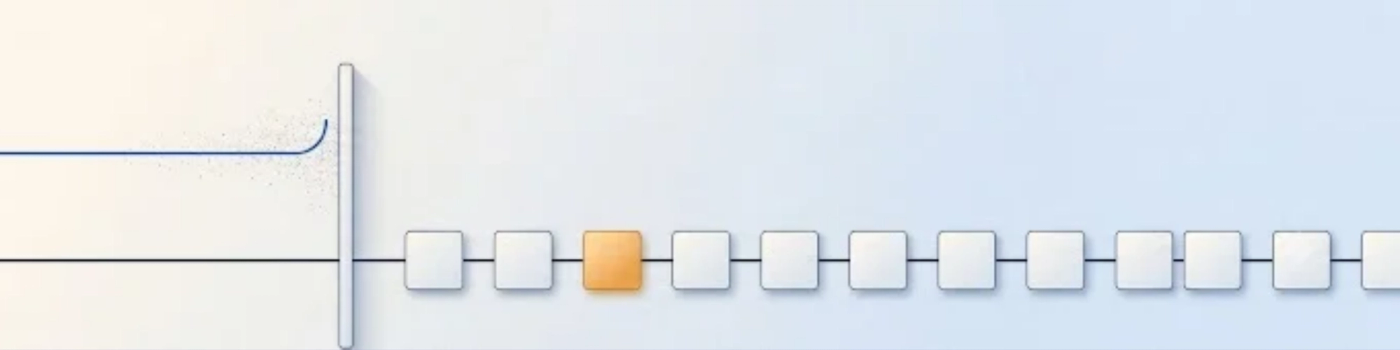
A federal judge postponed the Duration of Status rule on September 14, one day before it was due to take effect. The new I-539 and I-765 editions take effect on September 15 regardless. Policy and paperwork moved on separate tracks - and a caseload has to be ready for both.
On September 14, 2026, a federal judge in Massachusetts postponed the DHS rule that would have ended Duration of Status for F, J, and I nonimmigrants - one day before it was scheduled to take effect. Judge F. Dennis Saylor IV found the plaintiffs likely to succeed on the merits and ordered that the final rule be postponed pending final resolution of the case. DHS and ICE are barred from implementing it in the meantime, and the long-standing D/S framework remains in place nationwide.
On September 15 - today, in US filing terms - the new 09/15/26 editions of Form I-539 and Form I-765 take effect exactly as scheduled, with no grace period. USCIS had published those editions because, in its own words, they were necessary to apply the final rule - the rule that is now postponed. The policy reversed. The paperwork did not. If you run a caseload, that gap is the entire story of this week.
The decision landed with less than a day to spare
When the rule was published in July, we wrote that it turned every F and J file into a hard deadline, and that corporate teams would be managing two adjudications against one start date. That analysis holds - it is simply on hold. Nothing about the operating problem was wrong. Only the date it arrives has moved, and it moved with under twenty-four hours of notice.
For most of September, university international offices were telling F-1 and J-1 students to be physically present in the United States on September 15 to preserve transitional protections. Firms were triaging filings against a fixed admission date and a grace period about to shrink from 60 days to 30. Every piece of that guidance was correct when it was issued and obsolete within a day.
This is not a failure of anyone's monitoring. Nobody could have read the docket faster. The problem is structural, and it is the same one behind the 60 days' notice that came with mandatory e-filing: when the outcome of a rule is unknown until shortly before it binds, the only safe posture is to have both versions of your operation already built. The Government Notice Agent watches the Federal Register, agency alerts, and case dockets continuously, and the Deadline Agent holds the dates that each outcome would produce - so the moment one branch closes, the other is already standing.
Form editions are a separate axis from policy
The instinct after a ruling like this is to assume everything downstream of the rule is paused too. It is not. The 09/15/26 editions replaced the 08/28/24 I-539 and the 08/21/25 I-765 on schedule, and USCIS will reject a filing postmarked on or after September 15 that uses an older edition. It will also reject a new edition filed early. As of this writing, USCIS had not published an alert reconciling those editions with the postponed rule.
A rejection on the wrong form edition is not a legal question. It is an intake question, and it costs a filing date. CodioForms treats edition validity as its own date-gated axis, independent of whatever the underlying policy is doing - which is why the September 15 cutover was configured weeks ago and needed no change when the rule was postponed. The Forms Agent assembles against the edition that is correct on the day the package actually goes out, not the day the matter was opened.
That distinction matters again on September 18, three days from now. On that date the new public charge standard and a new I-485 edition both take effect, and the filing-date rule there is unforgiving in its own way - an application accepted before the cutover is adjudicated under the old standard no matter when the decision issues. Two separate cutovers, two separate sets of rejection traps, inside one week.
Retracting guidance is harder than issuing it
Somewhere in your sent mail is a travel advisory that is now wrong. The hard part is not writing the correction - it is knowing exactly who received which version, which students changed a flight because of it, and which cases were sequenced around a grace period that never shrank. Most teams cannot answer that without reading back through email.
The Client Comms Agent keeps every outbound advisory tied to the case and the person who received it, so a reversal becomes a filtered list rather than an archaeology project. The Case Assistant surfaces which files were re-sequenced under the old assumption and need to be put back. And for the student who is mid-journey with a printed advisory in hand, the ability to prove current status in seconds rather than days is the difference between an inconvenience and an incident.
Build for the branch you did not plan for
The rule is postponed, not dead. The government is expected to appeal, the merits are still open, and the same coalition will be back in court. Somewhere in the next several months, a date will land again - and it may land with a day's notice, exactly like this one did.
You cannot predict which way a rule will resolve, or when. You can be ready for any version of it. That readiness is not a memo or a calendar reminder - it is an operation that already holds both branches, watches for the one that lands, and moves the caseload the same day. GlobalCodio builds and runs that operation in the background, so a ruling at 5pm on a Monday is a routing decision rather than a fire drill.